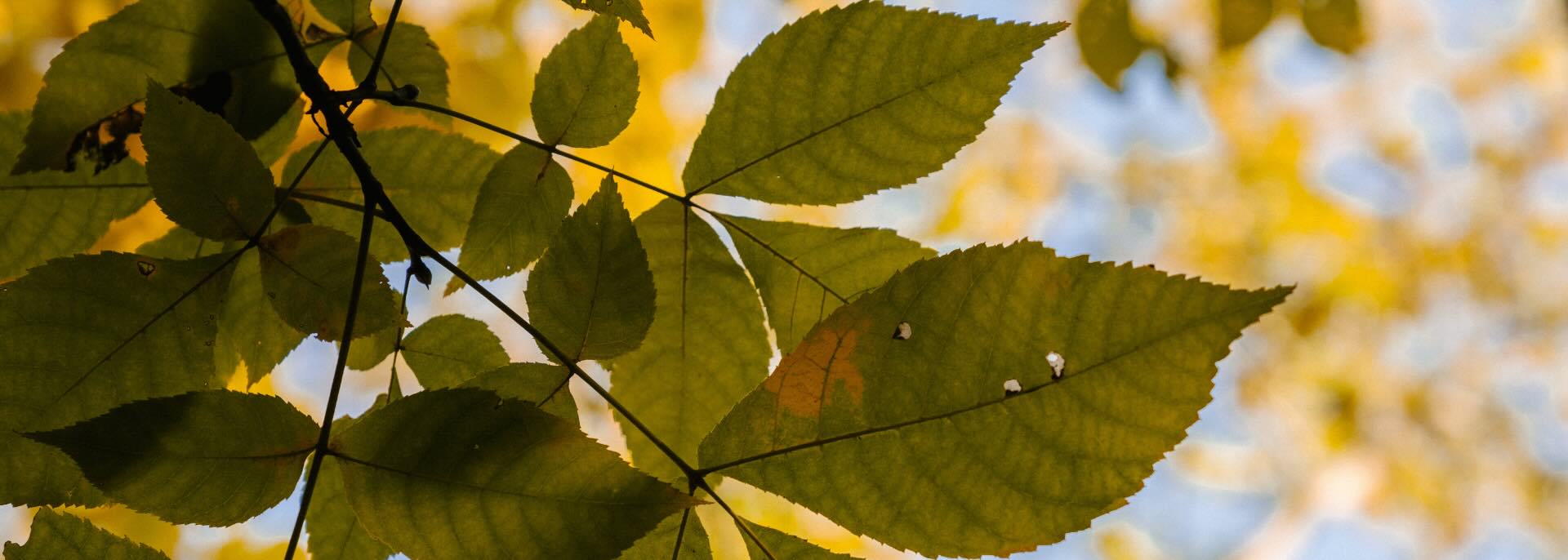
Ash Dieback disease first appeared in the British Isles in the early 2000s from the importation of diseased trees, as well the wind bringing black spores from continental Europe. Even though we are at the beginning of the epidemic there is a risk that we may lose up to 80% of our ash trees to this disease.
In Denmark the disease spread to around 90% of their total ash tree population. The reason for this is simply because there is currently no cure for Ash Dieback; it is the most significant disease affecting trees since the Dutch Elm disease of the 1960s and 1970s.
Fortunately, some trees have shown to have some resistance to this disease, which means that eventually our native stock can return to current levels. However, returning to current numbers after the disease has fully spread could take up to 50 years.
Since 2020 Shrewsbury Town Council has annually been surveying its ash trees for any signs of the disease and have recommended the necessary types of remedies, which may include removal in order to prevent the infection of other trees in the area.
Some symptoms associated with Ash Dieback are black botches on leaves with the afflicted ones wilting, blackening, and shrivelling on the tips of the shoots; branches with dieback that have bushy epicormic growth in the crown of the tree, and dark lesions on the trunk of the tree that are close to dead side shoots or at the base of the tree.
As part of our Ash Dieback Policy, we replant up to three trees to replace any we remove.
The trees have been chosen from a list identified by Forest Research to best replicate the ecosystem functions and species use of the lost ash and include oak, rowan, birch, aspen and field maple. the replanting process also includes 3-5 years of after-care of the tree to encourage success.